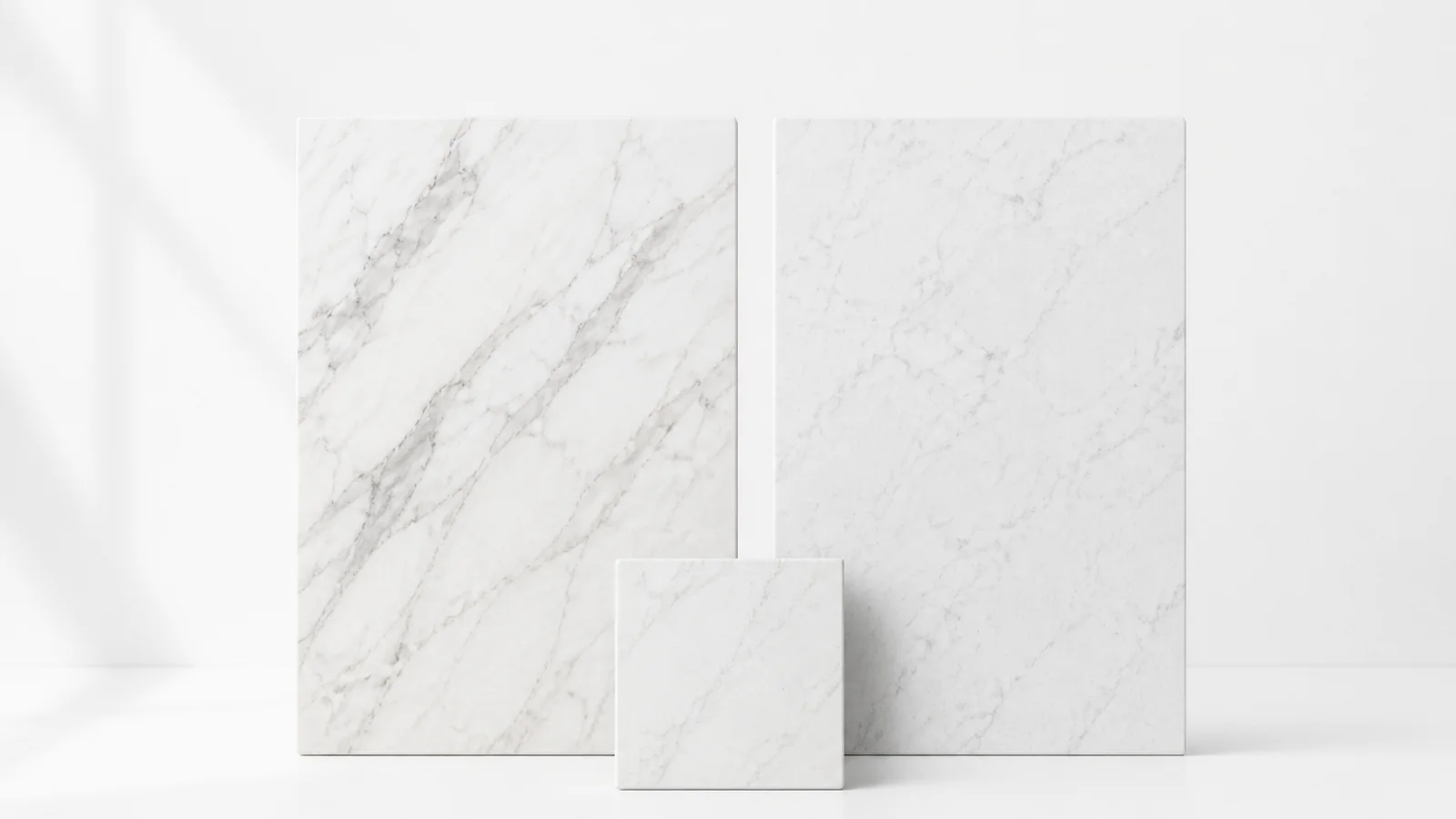
Marble and Quartz Kitchen Design: How to Combine Both Beautifully | Quartile India
Explore marble and quartz kitchen design ideas that combine natural elegance with everyday durability, without compromising on style or practicality.
Ask any homeowner what they want from their kitchen, and you'll usually hear two things that sound like they're pulling in opposite directions: the timeless beauty of natural marble, and a surface tough enough to survive daily chaos without a second thought. For years, that meant choosing one and quietly accepting the trade-off. These days, more homeowners are skipping the compromise entirely with marble and quartz kitchen design that puts both materials to work exactly where each one shines.
This guide walks through why this combination has become so popular, where each material earns its place, and how to plan a kitchen that gets the best of both worlds without feeling disjointed.
Why Combine Marble and Quartz in the First Place
Why Mix Marble and Quartz in Kitchen Spaces
Marble brings a depth of character that engineered materials still struggle to fully replicate, unique veining, natural luminosity, and a sense of timeless luxury. Engineered quartz counters with something marble can't offer on its own: consistent, dependable durability that shrugs off daily wear without demanding constant vigilance.
Combining the two lets you place marble where its beauty gets to shine without much daily stress, while quartz handles the heavy lifting in zones that see constant use. It's less a compromise than a genuinely smarter way to design a kitchen around how it actually gets used.
Understanding What Each Material Brings to the Table
Imported Marble Maintenance Realities
Marble's biggest draw is also where its care demands come from. Its natural porosity means imported marble maintenance involves periodic sealing and a certain amount of vigilance around acidic spills, oil, and wine, all common kitchen hazards. This doesn't make marble impractical, but it does mean it performs best in areas with lower day-to-day contact, like a kitchen island top used more for display and light prep than heavy cooking.
Engineered Quartz Durability Advantages
Engineered quartz durability comes from its manufactured composition, a blend of crushed natural quartz and resin that creates a surface far less porous than natural stone. This makes it highly resistant to staining, scratching, and everyday wear, requiring little more than routine cleaning to stay looking sharp. It's the material best suited to the zones of your kitchen that see constant, unforgiving use.
Heat Resistance Comparison: Marble vs Quartz
Heat resistance comparison is where these two materials diverge in an important, practical way. Marble generally handles direct heat reasonably well, making it forgiving of a hot pan set down briefly. Engineered quartz, because of its resin content, is more vulnerable to heat damage and can discolour or crack if exposed to very high temperatures without a trivet or protective barrier.
| Factor | Marble | Engineered Quartz |
|---|---|---|
| Heat resistance | Good | Moderate, needs trivets |
| Stain resistance | Requires sealing | Excellent |
| Scratch resistance | Moderate | High |
| Maintenance | Regular sealing needed | Low effort |
| Best for | Islands, backsplashes, accents | Prep zones, high-use counters |
Knowing this helps guide where each material makes the most sense within your layout, rather than treating heat resistance as a universal deciding factor.
Marble Versus Quartz for Villa Kitchen Islands
Kitchen islands occupy a unique role, they're often the visual centrepiece of the room, but they don't always take the brunt of heavy cooking activity the way a main countertop does. This makes marble versus quartz for villa kitchen islands a genuinely interesting decision, since islands are frequently where homeowners choose to showcase marble's natural beauty precisely because the surface sees comparatively gentler use.
In larger villa kitchens with a separate prep counter or butler's pantry handling the heavy-duty work, a marble island becomes an achievable, low-risk way to enjoy the material's full visual impact.
How to Combine Marble and Quartz Surfaces Successfully
Combine Marble and Quartz Kitchen Surfaces Thoughtfully
A few practical approaches make this pairing work seamlessly rather than looking like a mismatched patchwork:
- Marble island, quartz perimeter counters. This is one of the most popular layouts, keeping marble in a lower-contact showcase zone while quartz handles the sink, stove, and prep areas.
- Marble backsplash, quartz countertop. This keeps marble entirely off the work surface while still bringing its veining and texture into the visual design.
- Marble accent panels, quartz elsewhere. A marble waterfall edge or feature panel on an island's side, paired with a quartz top, balances visual drama with practical durability.
Imported Marble with Quartz Countertop Combo Tips
When pairing imported marble with a quartz countertop combo, colour coordination matters as much as material placement. Choosing a quartz variety that echoes marble's veining or base tone creates cohesion, rather than having two strongly contrasting materials competing for attention in the same room.
Marble Accents with Quartz Countertops: Design Ideas
Beyond islands and backsplashes, marble accents can be woven into a predominantly quartz kitchen in several understated ways:
- A marble inset cutting board built into a section of the quartz counter, purely for display or light use.
- Marble open shelving paired with quartz counters below, adding texture without covering high-traffic surfaces.
- A marble-clad range hood as a striking focal point above a quartz cooking zone.
These smaller touches let marble's character come through without exposing the material to the wear a full countertop would face.
Marble and Quartz Kitchen for Heavy Use Households
Marble When Durability Matters, Quartz Support
For households that cook frequently or have a busy family kitchen, leaning more heavily on quartz while reserving marble for accent moments is generally the smarter approach. Marble when durability matters quartz support isn't about avoiding marble altogether, it's about being intentional regarding where it's placed, keeping it away from direct heat, acidic spills, and heavy daily contact.
This strategy lets even the busiest households enjoy marble's presence in their kitchen without the anxiety of babying a high-traffic surface every single day.
Stone Countertop Installation and Kitchen Countertop Support Considerations
Combining two different materials in one kitchen does add a layer of complexity to stone countertop installation. Marble and quartz differ slightly in thickness and weight, so proper kitchen countertop support, including adequate cabinetry reinforcement, needs to be planned with both materials in mind from the outset. Working with an experienced fabricator ensures seams, transitions, and support structures are handled correctly so the finished result feels intentional rather than pieced together.
FAQ
Frequently Asked Questions
Common questions about this topic from the Quartile team.
Combining both lets marble's natural beauty shine in lower-contact areas like islands and backsplashes, while quartz handles high-traffic zones with better everyday durability.
Tags