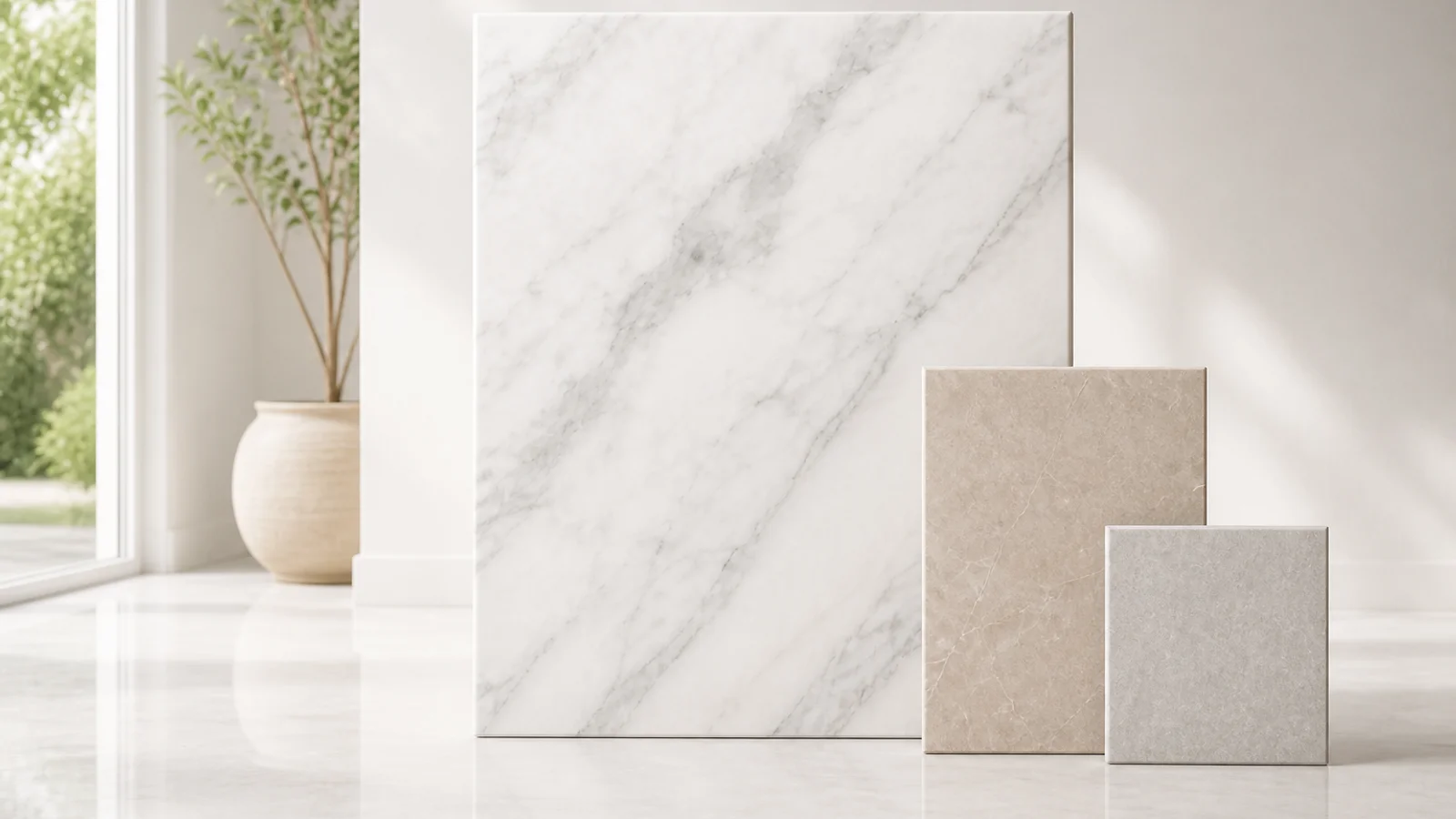
Can Imported Marble Really Make a Difference in Hyderabad's Humid Climate for Residential Floors?
Wondering if imported marble can handle Hyderabad's humidity? Here's an honest look at moisture resistance, durability, and how it compares to other flooring options.
If you have ever stood in a showroom staring at a gorgeous slab of imported marble and wondered whether it will survive a Hyderabad monsoon, you are not alone. Marble looks stunning under showroom lighting, but real homes deal with real weather, and Hyderabad's mix of dry heat and heavy seasonal humidity puts every material to the test.
So does imported marble genuinely hold up, or is it more style than substance once the rains set in? Understanding the climate impact on floor materials is the key to answering that honestly.
Why Climate Matters More Than Most Buyers Realize
Every flooring material reacts differently to moisture, temperature swings, and humidity in the air. What performs beautifully in a dry, temperate climate can behave very differently in a city where humidity climbs sharply for months at a time.
Hyderabad's climate brings a distinct pattern: dry, hot stretches for much of the year followed by a monsoon season that pushes indoor humidity up considerably. A floor might look perfectly fine on installation day and only reveal weaknesses a year or two later, once moisture has had time to work its way in.
How Humidity Actually Affects Flooring
Humidity damage to flooring usually shows up gradually rather than all at once. Common signs include:
- Subtle discoloration or staining that appears without an obvious spill
- A faint musty smell, especially in enclosed or poorly ventilated rooms
- Slight lifting or unevenness where the flooring meets the subfloor
- A dull, hazy look developing on surfaces that were once glossy
These issues rarely come from the stone itself failing outright. More often, they trace back to how porous the material is and how well moisture was managed during installation.
Porosity: The Real Deciding Factor
If there is one property that determines how well flooring copes with humidity, it is porosity and moisture resistance. Porosity refers to how many microscopic gaps exist within a material, and those gaps determine how easily water and moisture vapor can move in and settle.
Where Marble Stands
Natural marble is a porous stone, though the degree varies depending on where it is quarried. Some imported varieties are denser and less absorbent than others, which is part of why sourcing matters when choosing marble for a humid environment.
Imported marble performance in Hyderabad humidity often comes down to two things: the specific type of marble and how well it was sealed before and after installation. A high-quality slab that has been properly sealed resists moisture intrusion far better than an unsealed one, even within the same general category of stone.
Does Imported Marble Resist Mold in Humid Climates?
No natural stone is entirely immune to mold if conditions are right for it. Mold needs moisture, organic material, and time, and a poorly sealed marble floor in a damp, low-ventilation room can provide exactly that.
That said, natural marble durability in monsoon climates holds up reasonably well when the floor is sealed correctly, airflow is decent, and spills are wiped up promptly. The stone itself is rarely the main culprit in mold cases; poor maintenance and inadequate sealing usually are.
Marble vs Other Flooring Options in Humid Conditions
It helps to see how marble stacks up against common alternatives when humidity is a real concern.
Marble vs Porcelain for Humid Home Flooring
Porcelain tile is manufactured to be extremely dense and far less porous than natural stone. When comparing marble vs porcelain for humid home flooring, porcelain generally wins on raw moisture resistance and requires less ongoing maintenance. However, it cannot match the natural depth, veining, and warmth that marble brings to a living space. Many homeowners choose marble for main living areas and reserve porcelain for wetter zones like bathrooms or utility spaces.
Marble vs Engineered Quartz in Humid Conditions
When weighing marble vs engineered quartz in humid conditions, quartz tends to be less porous and more stain-resistant since it is a manufactured composite rather than a fully natural stone. Marble, however, offers a one-of-a-kind aesthetic and classic appeal that ages well with proper care.
| Flooring Type | Moisture Resistance | Aesthetic Appeal | Maintenance Needs |
|---|---|---|---|
| Imported Marble | Moderate, improves with sealing | Exceptional, unique veining | Regular sealing and care |
| Porcelain Tile | High | Good, but more uniform | Low |
| Engineered Quartz | High | Very good, consistent patterns | Low to moderate |
Tile vs Stone Flooring: The Bigger Picture
Zooming out, the tile vs stone flooring debate usually comes down to priorities. Tile is more forgiving in humid conditions with less upkeep, while natural stone offers character and long-term value that tile rarely matches.
Why Marble Cracks in Humid Climates
Cracking is often blamed on humidity directly, but the real story is usually more specific. It typically comes down to one of these factors:
- Poor subfloor preparation, where an uneven or unstable base puts stress on the slab over time
- Inadequate subfloor moisture control, allowing trapped moisture beneath the stone to cause shifting
- Temperature and humidity fluctuations, which cause the stone to expand and contract slightly over repeated cycles
- Improper installation, including insufficient expansion gaps or the wrong type of adhesive
This connects directly to flooring dimensional stability, which refers to how well a material holds its shape and size under changing environmental conditions. Marble has reasonably good dimensional stability on its own, but that stability can be undermined by a poorly managed subfloor or rushed installation work.
Expert Note: A well-prepared subfloor with proper moisture barriers does more to protect marble in humid climates than the marble's own natural properties alone.
Making Imported Marble Work for a Humid Hyderabad Home
If you love the look of marble and do not want to compromise, there are practical ways to make it perform well even when humidity climbs.
Choose Denser, Well-Sourced Varieties
Not all imported marble behaves the same way. Ask your supplier about the density and porosity of the specific variety you are considering, since imported marble when humidity is high performs noticeably better if the stone itself starts off less absorbent.
Prioritize Proper Sealing
A quality sealant significantly reduces how much moisture the stone can absorb. Resealing periodically, rather than treating it as a one-time step, keeps that protection intact for years.
Get the Subfloor Right
Subfloor moisture control matters just as much as the marble itself. A proper moisture barrier and a level, well-cured base go a long way toward preventing the shifting and cracking that humid climates can otherwise encourage.
Improve Room Ventilation
Good airflow reduces the amount of ambient moisture that settles onto and into the floor. Simple habits like using exhaust fans, opening windows when possible, and avoiding excessive standing water all help marble flooring for high humidity homes perform closer to its full potential.
FAQ
Frequently Asked Questions
Common questions about this topic from the Quartile team.
Yes, especially denser, well-sealed varieties. Performance depends more on stone quality and sealing than on marble as a material category.
Tags