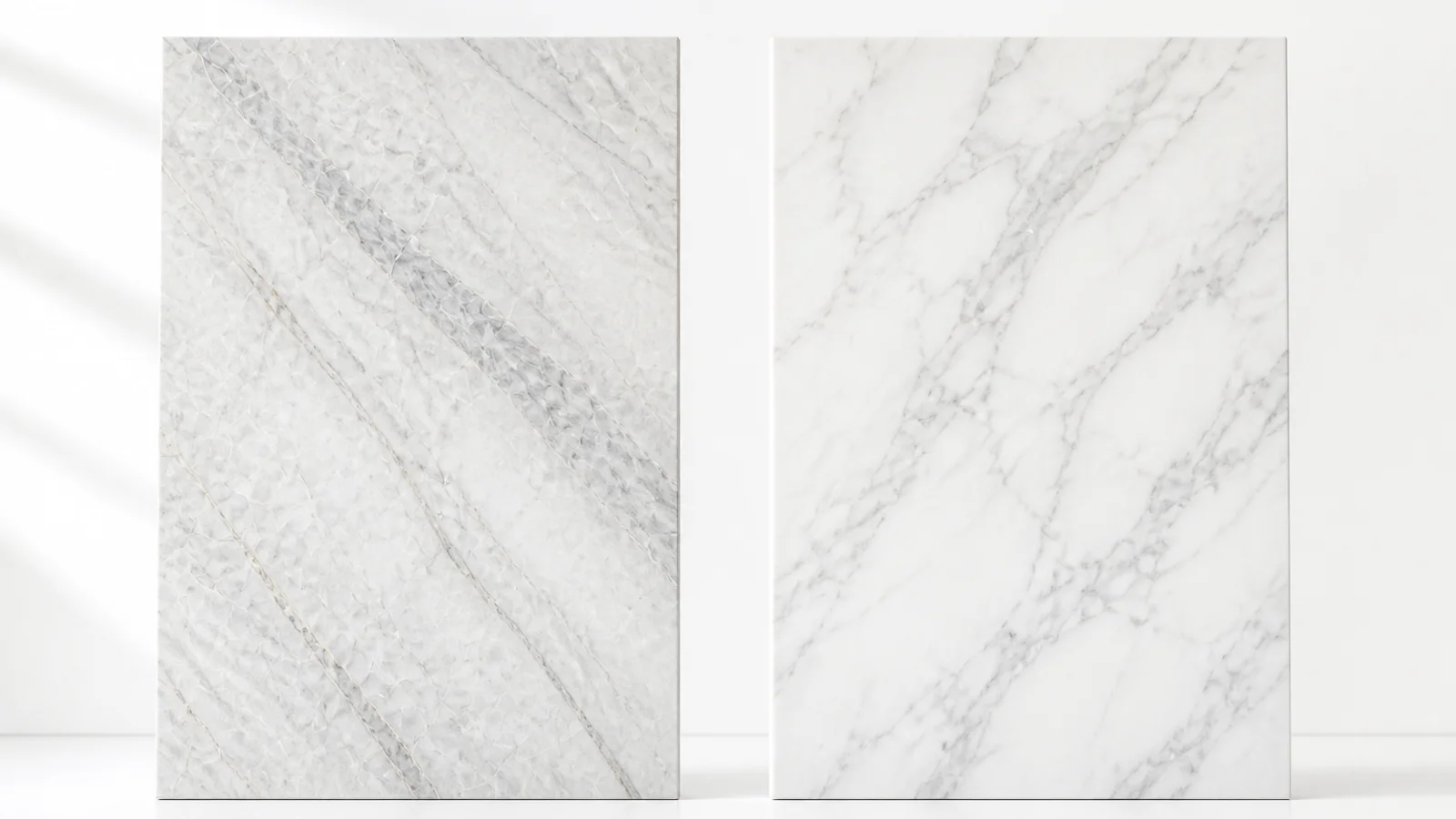
Quartzite Stone vs Marble Durability: Which Is Better? | Quartile India
Comparing quartzite stone vs marble durability for your home? Get an honest breakdown of hardness, porosity, and long-term performance to help you decide.
Marble has been the symbol of luxury flooring for centuries, and for good reason. But quartzite has quietly built a reputation as the tougher, more practical alternative that still delivers a similar sense of elegance. So when it comes to quartzite stone vs marble durability, which one actually holds up better under the weight of daily life?
The answer isn't as simple as picking a winner and moving on. Both stones bring genuine strengths to the table, and the right choice depends heavily on where you're installing it and how that space gets used. This guide breaks down the real differences so you can make a decision you won't second-guess a few years down the line.
Understanding the Basics: How Each Stone Forms
Marble forms when limestone is subjected to heat and pressure over an extended geological timeline, recrystallizing into the soft, luminous stone prized for its distinctive veining. Quartzite goes through a similar metamorphic journey, but starts as sandstone rich in quartz, which recrystallizes into an exceptionally dense, tightly bonded stone.
That difference in origin is why quartzite and marble perform so differently once installed in a home. Quartzite's structure makes it naturally harder and less porous, while marble's composition gives it that soft luminosity people love, along with the vulnerabilities that come with it.
Quartzite Hardness Mohs Rating vs Marble
The Mohs hardness scale offers the clearest starting point for comparing these two stones. Quartzite generally sits toward the harder end, often rivaling some of the toughest natural stones used in residential applications. Marble, by comparison, ranks noticeably softer, which explains why it scratches and etches more easily under everyday conditions.
Is Quartzite More Durable Than Marble for Home Flooring?
For most home flooring applications, yes. Quartzite's higher hardness rating translates directly into better resistance against scratches from furniture, pet claws, and dropped objects. Marble can still perform beautifully in the right setting, but it demands more careful handling and isn't the stone you want underfoot in a household that doesn't baby its floors.
| Factor | Quartzite | Marble |
|---|---|---|
| Hardness (Mohs) | Very high | Moderate |
| Porosity | Low | Higher |
| Acid resistance | Strong | Weak |
| Best for | High-traffic areas | Low-traffic, statement spaces |
| Maintenance | Lower effort | Higher effort |
Marble Porosity Issues and What They Mean for You
Porosity is where marble's reputation takes the biggest hit. Its structure contains more microscopic openings than quartzite, meaning it absorbs liquids more readily if left unsealed. This is why wine, oil, or even water can leave a lasting mark on marble if a spill isn't cleaned up quickly.
Quartzite, being denser and less porous, resists this kind of absorption far better. It still benefits from sealing, but it's noticeably more forgiving if you occasionally forget to wipe up a spill right away.
Acid Resistance Comparison: Why This Matters More Than You'd Think
Quartzite vs Marble Acid Resistance for Kitchen Use
Kitchens are full of acidic culprits, lemon juice, tomato sauce, vinegar, and wine, all of which can etch marble on contact. That dull, cloudy mark you sometimes see on marble countertops isn't a stain; it's surface damage from an acidic reaction, and it can't be polished away as easily as people expect.
Quartzite handles these same acidic exposures with far more resilience. Its mineral composition makes it largely resistant to etching, a major reason why quartzite vs marble acid resistance for kitchen use has become such an important consideration for homeowners choosing countertops or kitchen flooring.
Why Quartzite Outperforms Marble in High-Traffic Areas
Entryways, hallways, living rooms, staircases, these are the zones where flooring takes the most abuse day after day. Quartzite's density and hardness make it the more dependable choice here, resisting the scuffing, scratching, and gradual dulling that marble can develop under constant footfall.
Which Stone Lasts Longer, Marble or Quartzite, for Staircases?
Staircases see concentrated wear on a narrow surface area, with every step adding to the cumulative impact. Quartzite tends to outlast marble here, holding its finish and edge definition longer under repeated contact, while marble is more prone to developing worn patches on frequently used steps.
Marble vs Quartzite for Bathroom Floors Durability
Bathrooms bring their own challenge: near-constant moisture exposure. Marble's higher porosity makes it more vulnerable here, since standing water and humidity can gradually work into the stone if sealing isn't maintained diligently.
Quartzite's lower porosity gives it a real advantage in bathroom settings, resisting moisture absorption more effectively and reducing the risk of water-related staining or mineral buildup over time. That said, both stones can perform well in a bathroom with proper sealing and a slip-resistant finish, so this comes down to how much ongoing maintenance you're prepared to commit to.
Quartzite vs Marble for Outdoor Patio Flooring India
Outdoor spaces expose stone to sun, rain, and temperature swings, all of which test durability in ways indoor flooring never faces. Quartzite generally holds up better outdoors, resisting UV fading and moisture absorption more consistently than marble, which can be more susceptible to weathering and surface degradation with year-round exposure.
If you're planning an outdoor patio, quartzite is typically the safer long-term investment, while marble is better reserved for covered or indoor spaces shielded from constant weather exposure.
Stone Surface Wear Patterns: What to Expect Over Time
Every stone floor develops character over the years, but the nature of that wear differs between the two.
- Marble tends to develop a softer patina, along with occasional etch marks near kitchens or bathrooms if acidic exposure isn't managed carefully.
- Quartzite generally retains its original polish and edge definition much longer, showing minimal wear even in busy households.
Neither pattern is inherently bad. Some homeowners love the aged, lived-in character marble develops over time. Others prefer quartzite's ability to look nearly untouched for years.
Quartzite Stone Maintenance Compared to Marble Care
Maintenance requirements differ meaningfully between the two, and it's worth understanding this before you commit either way.
- Marble needs more frequent sealing, prompt spill cleanup, and avoidance of acidic cleaning products to prevent etching.
- Quartzite also benefits from periodic sealing, but its lower porosity makes it more forgiving of occasional lapses in care.
Neither stone is high-maintenance in absolute terms, but quartzite offers more room for error in households without time for constant vigilance.
Quartzite vs Marble Cost and Durability Comparison India
Cost considerations often go hand in hand with durability when homeowners make their final decision. Quartzite, being denser and more challenging to cut and finish, generally commands a higher price than many marble varieties, though pricing ultimately depends on the specific stone type, sourcing, and finish quality.
Factor in quartzite's superior durability and lower long-term maintenance needs, and many homeowners find the higher upfront cost balances out over the years through reduced repair, resealing, and replacement expenses.
Making Your Choice: Quartzite or Marble?
- Choose quartzite if you want maximum durability, better acid and stain resistance, and lower long-term maintenance, especially for kitchens, staircases, and outdoor spaces.
- Choose marble if you're drawn to its classic elegance and unique veining for lower-traffic, statement areas where careful maintenance isn't a burden.
Both stones can deliver a beautiful result. The right pick simply depends on matching the stone's strengths to how your space actually gets used.
FAQ
Frequently Asked Questions
Common questions about this topic from the Quartile team.
Yes, quartzite generally ranks significantly higher on the Mohs hardness scale, making it more resistant to scratches and everyday wear than marble.
Tags