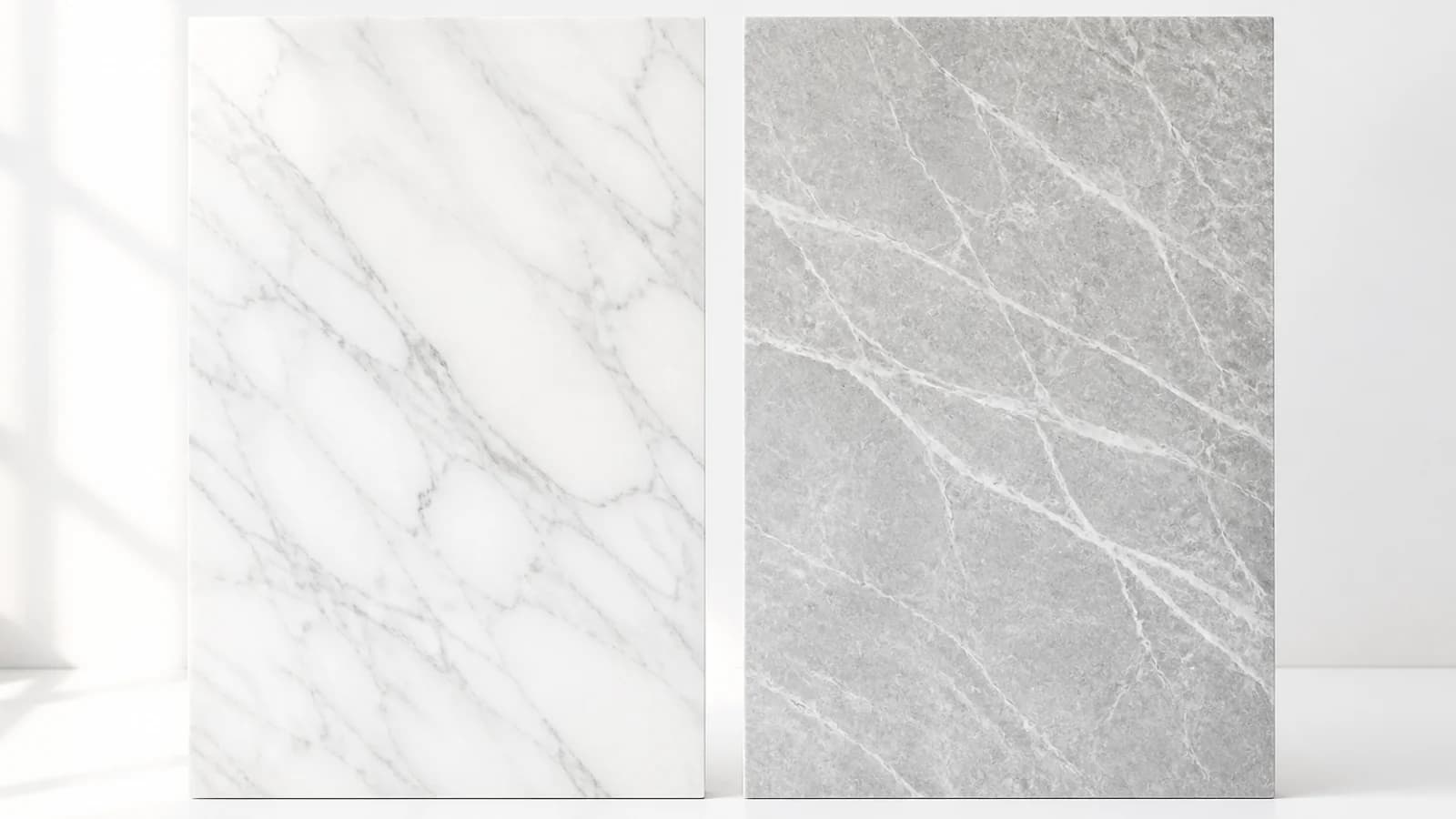
White Marble vs Grey Marble for Your Home: A Quartile India Guide
Torn between white marble vs grey marble for your home? Compare veining, maintenance, and style pairings to find the right shade for your space.
Standing between a white marble slab and a grey one, most homeowners assume the decision is purely aesthetic. Pick whichever looks nicer, right? Not quite. The white marble vs grey marble home debate actually involves real differences in how each stone performs, ages, and fits into your daily routine, not just how it photographs on installation day.
This guide breaks down both options honestly, covering everything from veining character to maintenance realities, so you can choose a marble that still feels right five years from now.
What Makes White and Grey Marble Different
Both stones come from the same broad mineral family, but the specific composition and mineral impurities present during formation determine the final colour, and that difference shapes far more than just appearance.
Carrara White Marble
Carrara white marble remains one of the most recognised marble types worldwide, prized for its soft white background and delicate, feathery grey veining. It carries a timeless, almost architectural elegance that has made it a staple in classical and contemporary interiors alike. Its lighter tone also makes it exceptionally good at brightening a space.
Grey Marble Types
Grey marble types vary considerably, ranging from pale, silvery tones to deeper charcoal-based stones with dramatic, bold veining. This variety gives grey marble a broader design range than people often expect, capable of feeling either soft and understated or striking and dramatic depending on the specific variety chosen.
Marble Colour Comparison: Veining and Visual Character
Veining colour contrast plays a huge role in how each stone reads in a room.
White marble typically features subtle, often grey or gold-toned veining against its pale base, creating gentle, flowing contrast that feels light and airy. Grey marble, on the other hand, often carries deeper, more dramatic veining, sometimes in white or even black, that stands out boldly against its darker background.
| Factor | White Marble | Grey Marble |
|---|---|---|
| Overall tone | Bright, airy | Grounded, dramatic |
| Veining contrast | Soft, subtle | Bold, striking |
| Best suited for | Classic, bright interiors | Contemporary, moody interiors |
| Stain visibility | More noticeable | Less noticeable |
| Light reflection | High | Moderate |
White Marble vs Grey Marble for Living Room Flooring
Living rooms tend to be where this decision matters most, since flooring covers such a large visual footprint.
White marble flooring creates an open, luminous feel that works beautifully in living rooms with ample natural light, amplifying brightness throughout the day. Grey marble flooring, by contrast, brings a grounded, sophisticated warmth that pairs particularly well with contemporary furniture and darker accent pieces, without the glare that very light stone can sometimes create in intensely sunlit rooms.
Which Marble Colour Suits Indian Home Interiors Better
There's no universal answer here, since Indian interiors span everything from bright, minimalist apartments to warm, traditional homes filled with wooden furniture and rich textiles.
White marble tends to suit homes leaning toward a classic, luxurious aesthetic, especially spaces with generous natural light where its brightness can truly shine. Grey marble suits homes with a more contemporary, understated design language, particularly those pairing the stone with warm wood tones or bold accent colours.
Grey Marble with Warm Wood Interiors Design Ideas
Grey marble and warm wood tones complement each other remarkably well, since the coolness of the stone balances the richness of the wood without either element overwhelming the other. This pairing works particularly well in living rooms and kitchens, where grey marble flooring or countertops sit alongside teak or walnut furniture for a balanced, grounded look.
Grey Marble Advantages Over White in High-Traffic Areas
Practicality matters just as much as aesthetics, especially in busy Indian households.
- Better stain concealment: Grey marble's darker tone naturally hides everyday marks, dust, and minor spills more effectively than white marble.
- Less visible wear: Scuffs and light scratches tend to blend into grey marble's tone rather than standing out starkly.
- Suited to entryways and hallways: High-footfall zones benefit from grey marble's ability to look clean between cleanings.
This makes grey marble a genuinely practical choice for busy households, even though white marble often gets the spotlight for its classic appeal.
White Marble Staining Issues Compared to Grey
White Marble Care Challenges for Indian Households
White marble's pale surface makes even minor staining far more visible than it would be on a darker stone. Oil splashes, turmeric stains from Indian cooking, and water rings all show up more readily against a light background, which means white marble demands more consistent sealing and prompt spill cleanup to stay looking pristine.
Grey marble isn't stain-proof either, but its tone naturally camouflages minor marks that would otherwise stand out on white marble. For households that cook frequently or have young children, this difference in visible maintenance can matter quite a lot in daily life.
White vs Grey Marble for Kitchen Countertops
Kitchens see more daily wear than almost any other room, making this comparison particularly relevant.
White marble countertops bring a bright, classic elegance, but they require diligent care given constant exposure to oil, spices, and acidic ingredients common in Indian cooking. Grey marble countertops offer a similar elegance with noticeably more forgiving stain visibility, making it a popular choice among homeowners who want the marble look without obsessing over every spill.
How to Choose Marble Colour for Small Apartments
Space constraints add another layer to this decision, and colour choice can genuinely affect how a compact space feels.
- White marble tends to work best in small apartments, since its brightness helps a limited footprint feel larger and more open.
- Lighter grey marble varieties can offer a similar effect while adding a touch more visual depth than pure white.
- Deeper grey marble is best reserved for larger rooms, since darker tones can make a small space feel more enclosed.
If brightness and a sense of openness are priorities, white or pale grey marble is generally the safer choice for compact interiors.
Making Your Final Decision
Choosing between white and grey marble ultimately comes down to a few honest questions:
- How much natural light does the room receive?
- How much daily wear and tear will the surface see?
- Does your household prioritize easier maintenance or classic brightness?
- What's the dominant tone of your existing furniture and decor?
Answering these will point you toward the marble that fits your actual lifestyle, not just the one that looks best under showroom lighting.
FAQ
Frequently Asked Questions
Common questions about this topic from the Quartile team.
It depends on your space and lifestyle. White marble suits bright, classic interiors, while grey marble offers better stain concealment for busy households.
Tags