Elevation Stone Cladding for Villas: Natural Stone Facade Inspiration | Quartile India
Exploring elevation stone cladding for your villa? Compare stone types, textures, and design patterns to find the right fit for your facade and climate.
The first thing anyone notices about a villa isn't the interiors or the landscaping. It's the facade. Long before a guest steps through the door, the exterior stone sets the tone, whether that's understated luxury, bold contemporary lines, or timeless warmth. Villa exterior cladding is one of those decisions that's hard to undo once installed, which makes getting it right from the start well worth the extra research.
This guide walks through the practical side of stone facade design, from choosing the right elevation stone types to understanding installation, cost considerations, and which textures perform well against India's varied climate.
Why Stone Cladding Remains the Gold Standard for Villas
Paint fades, render cracks, and composite panels can start looking dated within a few years. Natural stone, on the other hand, tends to age gracefully, developing character rather than wear. For villas, where the exterior needs to reflect a certain permanence and craftsmanship, stone cladding delivers a visual weight few other materials can match.
Beyond aesthetics, stone offers genuine functional benefits. It provides thermal insulation, helping regulate indoor temperatures against harsh sun exposure, and holds up well against monsoon rains, dust, and daily wear when the right stone type is chosen for the local climate.
Best Elevation Stone Cladding Options for Luxury Villas in India
Not every stone suits every villa; the best choice depends on architectural style, budget, and regional climate.
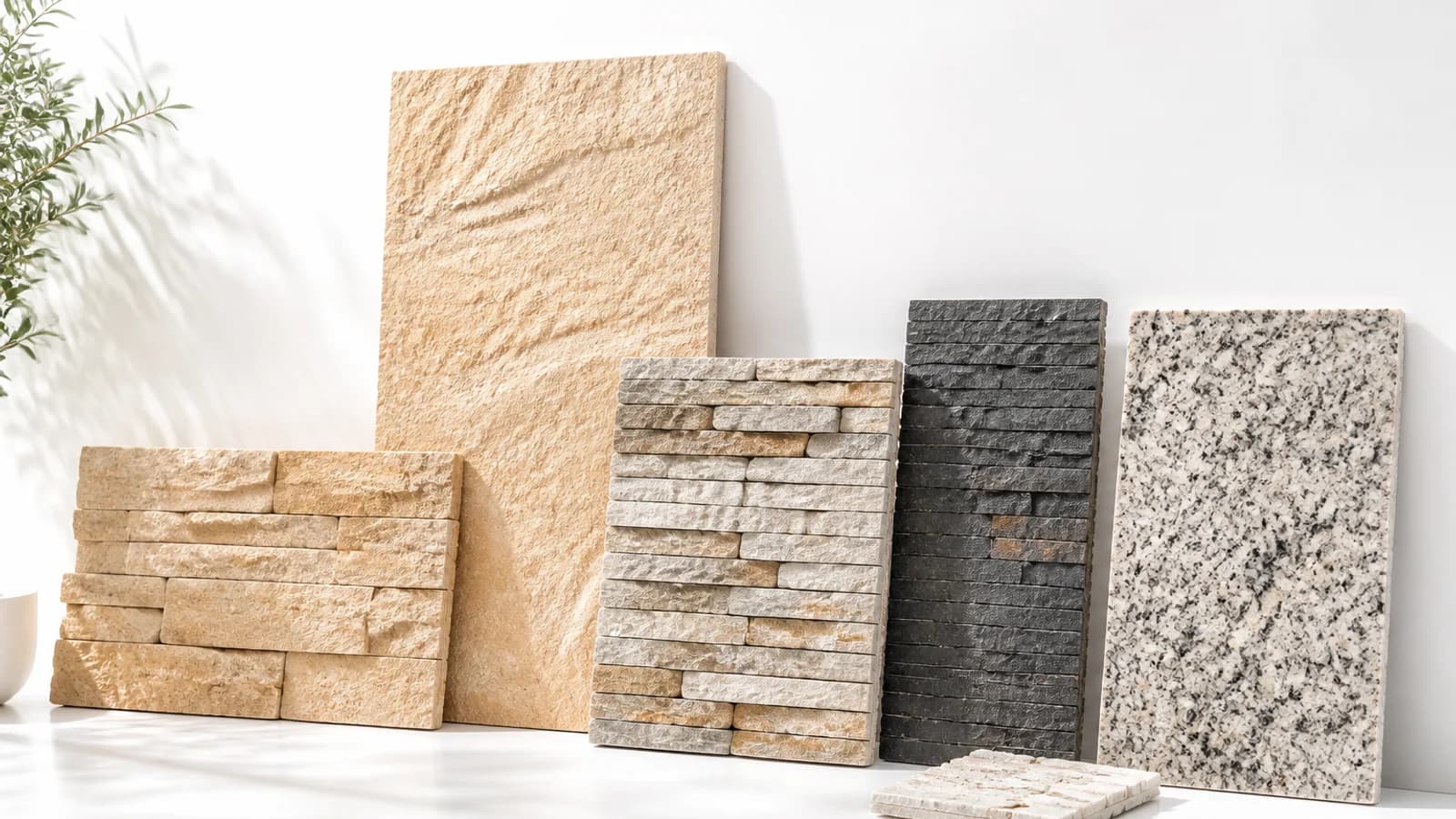
Sandstone
Warm, textured, and widely available across India, sandstone brings an earthy character that suits both traditional and contemporary villa designs, popular for feature walls and full facades alike.
Quartzite
Denser and more weather-resistant than sandstone, quartzite offers a refined, layered look with excellent durability. It's increasingly favored for villas that need to withstand intense sun and heavy seasonal rain without losing their finish.
Granite
Granite brings a bold, polished presence and exceptional durability, making it a strong choice for plinths, columns, and high-contact areas around villa entrances.
Slate
Slate's natural cleft texture and deep tonal range make it a favorite for accent walls and contemporary facades looking for dramatic contrast against lighter render or glass.
| Stone Type | Look | Best Use | Weather Performance |
|---|---|---|---|
| Sandstone | Warm, textured | Full facades, feature walls | Good, needs periodic sealing |
| Quartzite | Layered, refined | Facades in high-rain areas | Excellent |
| Granite | Bold, polished | Entrances, plinths, columns | Excellent |
| Slate | Textured, dramatic | Accent walls, contemporary designs | Good |
Natural Stone vs Artificial Stone Cladding for Villa Facades
Artificial or engineered cladding panels have improved significantly, offering lighter weight, faster installation, and generally lower upfront cost, a legitimate option for budget-conscious projects or facades with weight limitations.
That said, natural stone still wins on authenticity. No two slabs are identical, so your villa's facade genuinely stands apart rather than resembling a repeated printed pattern. Natural stone also tends to age better over decades, while some artificial panels fade or show wear sooner under prolonged sun exposure.
The right choice comes down to priorities: natural stone for long-term authenticity and resale value, quality artificial cladding for speed and budget flexibility.
Sandstone vs Quartzite for Villa Elevation Cladding
These two stones often come up together, since both offer warm, natural tones suited to a wide range of villa styles.
Sandstone tends to be more affordable and easier to source in varied cuts and finishes, popular for larger facade areas. Quartzite, typically more of an investment, offers superior density and weather resistance, which matters in regions with intense heat or heavy monsoon exposure.
If your villa faces significant weather extremes, quartzite is generally the safer long-term choice. For a broader facade area with flexibility in texture and tone, sandstone remains an excellent option.
How to Choose Elevation Stone for a South-Facing Villa
South-facing facades in India take the brunt of direct sun exposure throughout the day, which changes what to prioritize in a stone choice.
- Prioritize lighter tones to reduce heat absorption and keep the facade visually cooler.
- Choose denser stones like quartzite or granite, which resist sun-related fading and thermal stress better than porous options.
- Consider a textured finish over high-polish, since texture helps diffuse harsh direct light and reduces glare.
- Factor in proper sealing, since south-facing walls see more temperature fluctuation and benefit from extra protection.
Weather-Resistant Elevation Stone for Hyderabad Villas
Hyderabad's climate brings a demanding mix of intense summer heat and a distinct monsoon season, both testing exterior cladding over time. Quartzite and granite consistently perform well here, thanks to their density and low porosity, which reduces moisture absorption during heavy rains and resists fading through long, dry summers.
Sandstone remains viable too, provided it's properly sealed and maintained, since its slightly higher porosity means it benefits from more regular upkeep in this climate compared to denser stones.
Stone Cladding Patterns for Contemporary Villa Designs
Modern villa architecture increasingly favors intentional, structured patterns over uniform, flat cladding. Popular approaches include:
- Horizontal banding, elongating the facade visually to suit linear, minimalist architecture.
- Mixed-texture panels, combining polished and textured stone for depth and contrast.
- Vertical fins or fluted cladding, adding dimension and shadow play across the facade.
- Feature wall accents, using a bolder stone like slate or granite against a neutral primary cladding material.
These patterns work particularly well paired with large glass surfaces, a hallmark of contemporary villa design that lets the stone's texture and shadow lines take center stage.
Elevation Stone Cladding Cost Per Sq Ft for Villas in India
Cost varies considerably based on stone type, finish, sourcing, and installation complexity. As a general guide, sandstone tends to sit at the more accessible end, granite and quartzite fall into a mid-to-premium range depending on variety, and imported or highly finished stones command the highest investment. Rather than fixating on a single figure, request a detailed quote based on your specific facade design, since height, pattern complexity, and finish type all meaningfully influence the final cost.
Stone Cladding Installation Process for Villa Exteriors
A quality installation matters as much as the stone itself. The general process includes:
- Surface preparation, ensuring the underlying wall is clean, structurally sound, and properly primed.
- Framework or adhesive application, depending on whether a mechanical fixing system or direct adhesion method is used.
- Stone placement, following the chosen pattern with careful attention to joint alignment and spacing.
- Grouting and sealing, closing gaps and applying a protective sealant suited to the stone type and local climate.
- Final inspection, checking for level alignment, consistent joint lines, and overall finish quality.
An experienced installer familiar with local weather conditions makes a real difference in how the cladding performs over the years.
Project Inspiration and Applications
Beyond full facades, elevation stone cladding shows up beautifully in villa boundary walls, entrance porticos, water feature backdrops, and compound gate pillars. Many homeowners also use a secondary stone as an accent around windows or balconies, creating visual rhythm without cladding the entire structure in one material. Looking at completed villa projects facing similar sun exposure and climate conditions can offer valuable direction before finalizing your own design.
FAQ
Frequently Asked Questions
Common questions about this topic from the Quartile team.
It depends on climate and budget, but quartzite and granite are generally the most weather-resistant, while sandstone offers a budget-friendly, warm aesthetic.
Tags