Anti Slip Tiles for Outdoor Use: A Complete Selection Guide | Quartile India
Choosing anti slip tiles for outdoor use? This guide covers slip ratings, textures, and stone options to help you pick safe, durable outdoor flooring.
A beautiful terrace loses its charm fast the moment someone slips on it after a rain shower. Outdoor spaces in India deal with monsoons, splashing pool water, and dew-covered mornings, all of which turn a smooth, elegant surface into a genuine safety hazard if it wasn't built for the job. That's exactly why anti slip tiles for outdoor use deserve as much attention as the aesthetic you're chasing, because a gorgeous patio isn't much use if it isn't safe to walk on.
This guide walks through everything worth knowing before you choose outdoor tiles, from understanding slip resistance ratings to comparing textures and installation considerations that actually hold up over time.
Why Outdoor Tile Safety Can't Be an Afterthought
Indoor and outdoor flooring face completely different demands. Indoor tiles rarely deal with standing water, direct sun exposure, or algae growth, while outdoor surfaces contend with all three regularly. A polished finish that looks stunning in a living room becomes dangerously slick the moment it's wet, which is why outdoor tile safety needs to be baked into your selection process from the start, not treated as an afterthought once the aesthetic decision is already made.
Understanding R Rating Slip Resistance
Slip Resistance Ratings Explained for Outdoor Tile Selection
The R rating system is the industry standard for measuring how much traction a tile surface provides, particularly under wet conditions. Tiles are tested and classified along a scale, generally ranging from R9 at the lower end to R13 at the higher end, with higher numbers indicating greater slip resistance.
For most outdoor residential applications, tiles rated R10 or R11 strike a solid balance between safety and everyday practicality. Areas with heavier water exposure, like pool decks or open terraces in high-rainfall regions, often benefit from tiles rated R11 or higher, since these surfaces face more frequent and sustained moisture.
How to Test Slip Resistance of Outdoor Tiles Before Buying
Before committing to a tile, it's worth doing a hands-on check rather than relying on the rating alone.
- Wet the sample tile and walk across it in regular footwear to get a genuine feel for its grip.
- Check the surface texture by running your hand across it; a slight roughness usually indicates better traction than a perfectly smooth finish.
- Ask the supplier for the official R rating documentation, since reputable manufacturers test and certify their tiles rather than making unverified claims.
- Compare a few samples side by side in both dry and wet conditions to see how they genuinely differ underfoot.
Textured Outdoor Tiles vs Smooth Finishes
Textured Outdoor Tiles
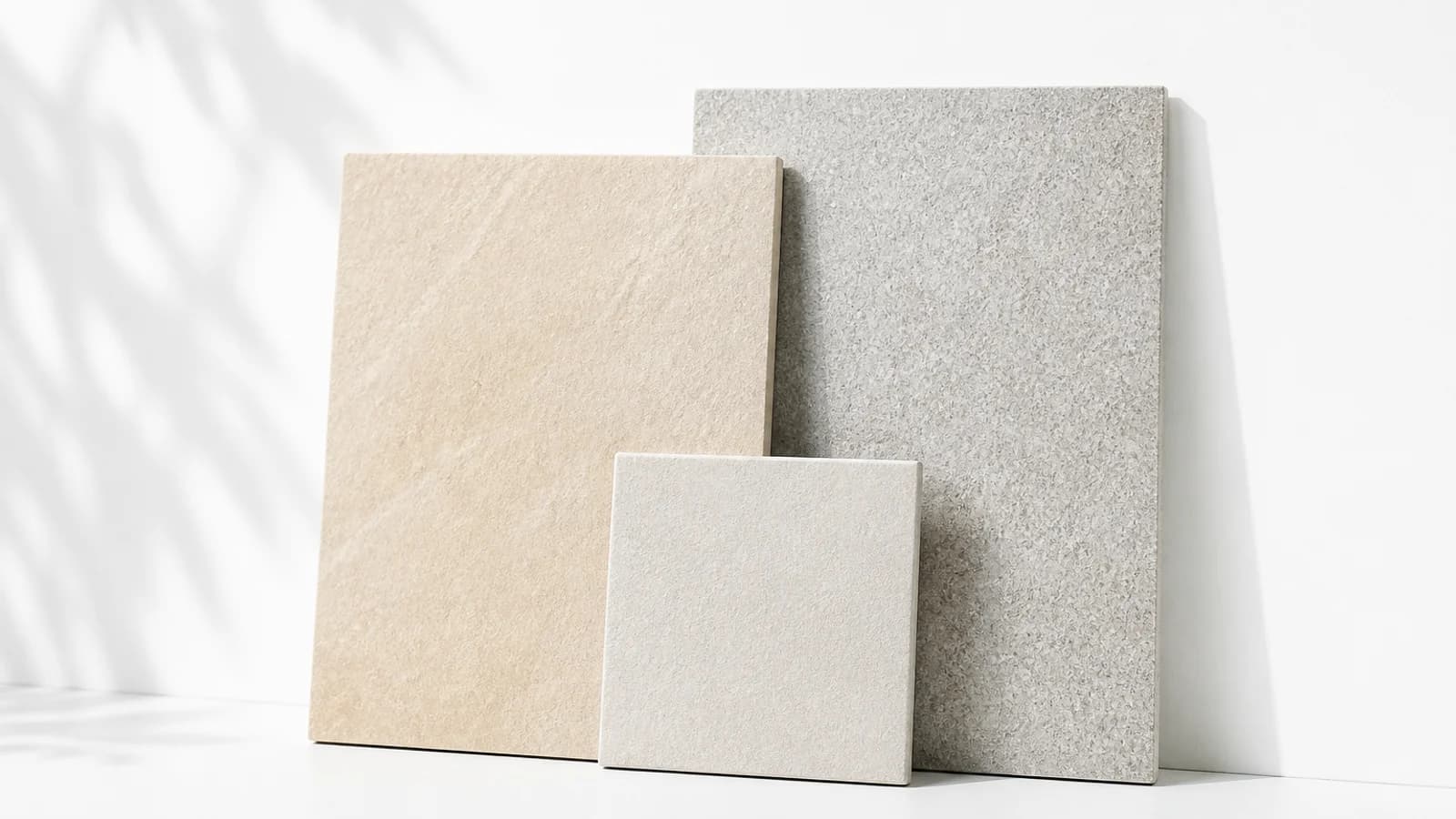
Textured outdoor tiles use a raised or roughened surface pattern specifically designed to interrupt water flow and increase grip. This texture doesn't have to come at the cost of style either; many textured finishes now mimic natural stone patterns convincingly while delivering genuine anti-slip performance.
Anti Skid Stone Finish Options
An anti skid stone finish typically falls into a few categories, each offering a different balance of grip and aesthetic:
- Flamed finish: Created by exposing the stone surface to intense heat, resulting in a rough, textured surface with excellent traction.
- Bush-hammered finish: A mechanically textured surface with a pitted, tactile quality that performs well in wet conditions.
- Leathered finish: A softer texture than flamed or bush-hammered options, offering moderate grip while retaining more visual smoothness.
Difference Between Honed and Textured Outdoor Stone Tiles
Honed finishes are smooth and matte, lacking the reflective shine of polished stone but still relatively flat compared to textured alternatives. While honed stone offers better grip than a high-gloss polish, it generally falls short of dedicated textured finishes when it comes to genuine slip resistance in consistently wet conditions.
Textured finishes, by contrast, are purpose-built for grip, with surface irregularities specifically designed to channel water away and increase friction underfoot. For outdoor applications with regular water exposure, textured finishes are almost always the safer choice, while honed stone works better suited to covered or lower-moisture outdoor areas.
Natural Stone Anti Slip Finishes for Outdoor Use
Natural stone remains a popular choice for outdoor flooring, and several varieties offer genuinely strong slip resistance when finished correctly.
Textured Granite Tiles for Outdoor Anti Slip Flooring
Textured granite tiles combine granite's natural durability with a roughened surface finish that performs reliably underfoot, even in consistently wet or high-traffic outdoor areas. Granite's density also makes it resistant to weathering, so the texture holds up well over years of sun and rain exposure rather than wearing smooth prematurely.
Sandstone and slate are other strong natural options, both offering inherently textured surfaces that provide good traction without requiring additional surface treatment.
Grip Tiles for Wet Areas: Where They Matter Most
Best Anti Slip Tiles for Outdoor Terraces in India
Terraces exposed to monsoon rain and direct sun benefit most from textured natural stone or high-R-rated vitrified tiles. Given India's climate variability, a tile that performs well in both intense heat and heavy rainfall offers the most reliable long-term choice for terrace flooring.
Anti Slip Tiles for Garden Pathways and Pool Decks
Pathways and pool decks see near-constant moisture, whether from irrigation, splashing, or humidity, making slip resistance especially critical here. Textured stone or tiles rated R11 and above are generally recommended for these zones, since the risk of slipping is highest in areas where bare feet and wet conditions combine.
Anti Slip Tile Installation Tips for Outdoor Patios in India
Even the best-rated tile underperforms if installation details are overlooked.
- Ensure proper drainage slope during installation, so water doesn't pool on the surface and increase slip risk.
- Use appropriate outdoor-grade grout, which resists weathering and helps maintain consistent surface texture at the joints.
- Avoid sealing textured tiles with high-gloss sealants, since this can inadvertently reduce the texture's natural grip.
- Work with installers experienced in outdoor applications, since outdoor tiling involves different considerations than indoor work, particularly around expansion joints and weatherproofing.
Choosing the Right Anti Slip Tile for Your Space
A few practical questions can help narrow your decision:
- How much direct water exposure will the area face, splashing, rain, or standing water?
- Is the space used barefoot, such as around a pool, or typically with footwear?
- Does the surrounding architecture call for a natural stone look or a more uniform vitrified finish?
- How much maintenance are you willing to commit to for sealing and cleaning?
Matching the tile's slip rating and texture to your specific use case matters far more than chasing a particular brand or finish trend.
FAQ
Frequently Asked Questions
Common questions about this topic from the Quartile team.
R10 or R11 generally suits most residential outdoor spaces, while pool decks and high-moisture areas benefit from R11 or higher.
Tags