Best Tiles for Wet Areas: Slip Resistance, Finish & Safety | Quartile India
Choosing the best tiles for wet areas? Compare slip resistance ratings, finishes, and materials to find a safe, stylish option for bathrooms and showers.
A bathroom floor doesn't need to be dramatic to be dangerous. It just needs to be wet and the wrong finish. Every year, countless slip-related injuries happen in bathrooms and shower areas, often in homes where the tile looked perfectly elegant in the showroom but turned genuinely hazardous the moment water hit its surface. Choosing the best tiles for wet areas isn't about sacrificing style for safety, it's about understanding which finishes and materials actually deliver both.
This guide breaks down slip resistance ratings, finish types, and material choices so you can make a confident decision for bathrooms, showers, and any other space that regularly deals with standing water.
Why Slip Resistance Deserves Priority in Wet Area Tile Selection
It's easy to get swept up in colour, pattern, and finish when choosing bathroom tiles, but none of that matters if the surface becomes a hazard the moment it's wet. Wet areas demand a fundamentally different approach to tile selection than living rooms or bedrooms, one where slip resistance sits at the top of the priority list rather than as an afterthought.
Understanding Slip Resistance Ratings
Tile Slip Resistance Comparison: DCOF and R Rating Systems
Two main classification systems help buyers compare slip resistance objectively: the DCOF, or Dynamic Coefficient of Friction, rating used widely for wet-area flooring, and the R rating system common in tile specifications internationally. Both essentially measure how much traction a tile surface provides underfoot, particularly when wet, with higher ratings indicating better grip.
For genuinely wet areas like shower floors, tiles with a higher DCOF or R rating are strongly recommended over standard tiles rated primarily for dry, low-moisture spaces. Asking your supplier directly about a tile's specific rating, rather than assuming based on appearance alone, is the most reliable way to compare options fairly.
Tile Finish Types and How They Affect Grip
Why Matte Finish Tiles Are More Slip Resistant
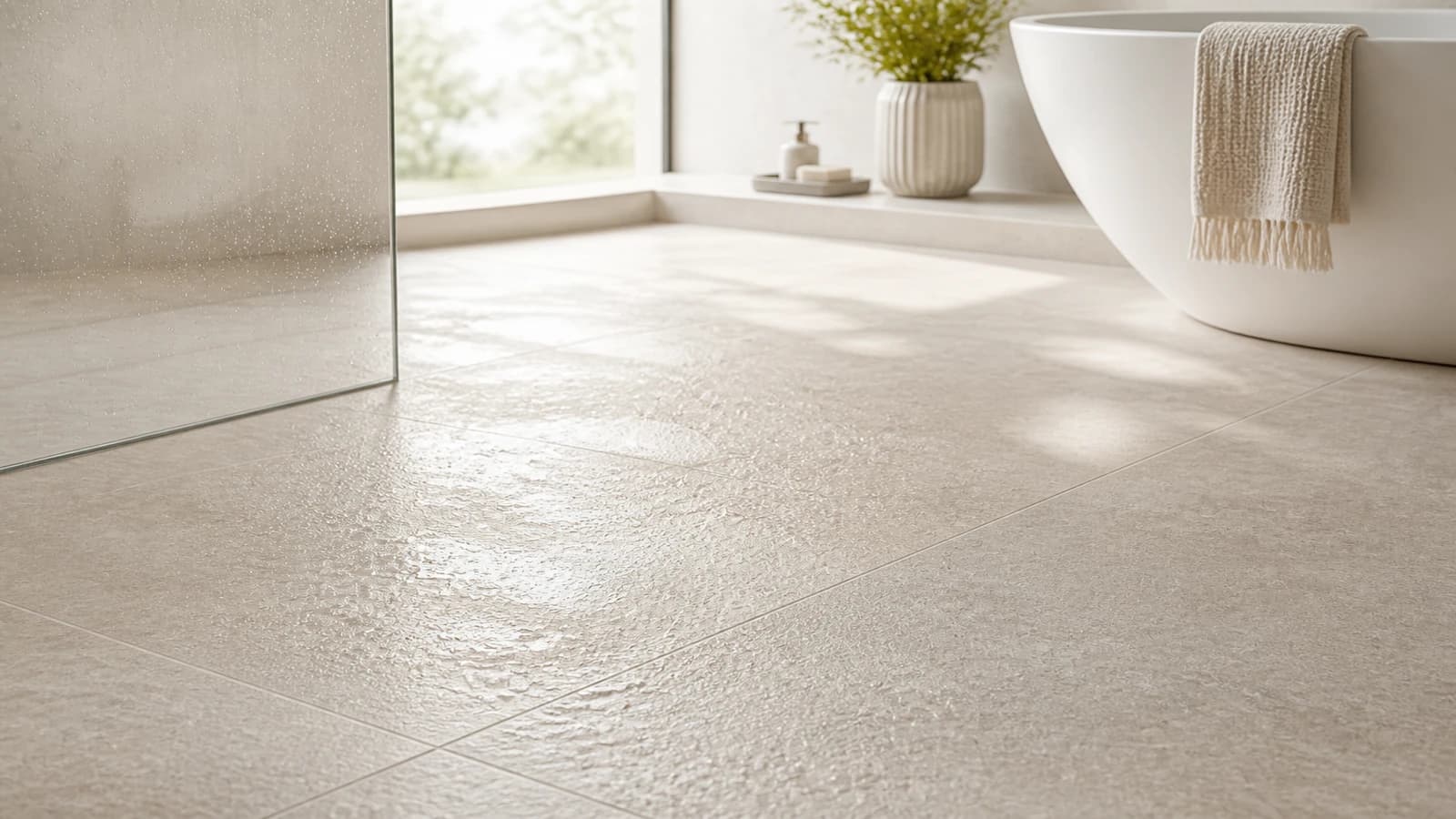
Matte finish tiles consistently outperform glossy, polished finishes when it comes to wet-area safety. The lack of a reflective, glass-like surface means matte tiles retain more microscopic texture, which translates directly into better grip underfoot, even when the floor is soaked. This is exactly why matte and honed finishes dominate shower floor and bathroom flooring recommendations, while polished tiles are generally reserved for dry areas like living rooms.
Textured Tiles When Wet
Textured tiles take this concept further, incorporating deliberate surface patterns or raised elements specifically designed to interrupt water flow and boost traction. These tiles are particularly well suited to shower floors and pool surrounds, where consistent water exposure makes maximum grip a genuine priority rather than a nice-to-have.
Porcelain vs Ceramic for Wet Areas
Porcelain and ceramic often get lumped together, but they behave quite differently once water enters the picture.
Porcelain Tile Benefits
Porcelain tile benefits centre around its exceptionally low water absorption, dense composition, and strong durability, all of which make it a standout choice for wet areas. Its manufacturing process creates a tighter, less porous structure than standard ceramic, meaning it resists moisture penetration far more effectively over the long term.
Comparing the Two Directly
| Factor | Porcelain | Ceramic |
|---|---|---|
| Water absorption | Very low | Moderate |
| Durability | High | Moderate |
| Cost | Generally higher | Generally lower |
| Best suited for | Showers, wet floors | Walls, lower-moisture areas |
| Slip resistance options | Wide range available | Available, fewer premium options |
Ceramic remains a perfectly reasonable choice for bathroom walls or lower-moisture zones, but porcelain generally earns its higher price tag in genuinely wet, high-exposure areas like shower floors.
Water Absorption Standards Worth Understanding
Water absorption standards classify tiles based on how much moisture they absorb relative to their weight, with lower absorption generally indicating better suitability for consistently wet environments. Tiles intended for shower floors and other high-moisture zones should sit toward the lower end of this classification, since higher absorption increases the risk of long-term moisture damage, staining, and even mould development beneath the tile surface over time.
Mosaic and Small Format Tiles for Wet Area Traction
Mosaic Tiles for Wet Area Traction
Mosaic tiles offer a natural advantage in wet areas that often gets overlooked: their smaller size means significantly more grout lines per area, and grout itself provides meaningful traction underfoot. This is part of why mosaic remains such a popular choice for shower floors specifically, even in otherwise minimalist bathroom designs favouring large format tiles elsewhere.
Small Format Tiles for Shower Grip
Small format tiles more broadly offer this same traction benefit, since more frequent grout joints translate to more texture breaks across the walking surface. For sloped shower floors in particular, where proper drainage requires multiple small pieces to follow the contour, this size naturally lends itself to both function and safety.
Bathroom Tiles for Hyderabad Humidity
Hyderabad's climate brings a genuine consideration into this decision, with humid stretches during the monsoon season that keep bathroom surfaces damp for extended periods. Tiles with low water absorption and strong slip resistance ratings become especially important here, since prolonged dampness increases both slip risk and the chance of moisture-related issues developing over time if the wrong material is chosen.
Porcelain, with its low absorption and wide range of slip-resistant finishes, tends to perform particularly well under these conditions compared to more porous alternatives.
Slip Resistant Tiles in Luxury Bathrooms
There's a common misconception that safety-focused tiles have to look purely utilitarian, but that's no longer the case. Slip resistant tiles in luxury bathrooms now come in a wide range of sophisticated finishes, from textured stone-look porcelain to matte marble-effect tiles that deliver genuine elegance without compromising on grip. Manufacturers have responded directly to demand for tiles that perform safely without sacrificing the high-end aesthetic homeowners want in a premium bathroom.
Installation Requirements for Wet Area Tiles
Even the best-rated tile underperforms without proper installation. A few requirements matter particularly for wet areas:
- Correct drainage slope, ensuring water flows toward drains rather than pooling on the surface.
- Appropriate waterproof membrane beneath the tile, protecting the subfloor from moisture penetration over time.
- Suitable grout selection, ideally a mould-resistant, water-repellent formulation for shower and high-moisture zones.
- Experienced installation, since wet area tiling involves considerations, like slope and membrane application, that differ meaningfully from standard dry-area tiling.
Choosing the Right Tile for Your Wet Area
A few practical questions can guide your final decision:
- How much direct water exposure will the area face, occasional splashing or constant shower use?
- Is the space used barefoot, making grip an even higher priority?
- Do you prefer the look of large format tiles or the added traction of mosaic and small format options?
- Does your climate, like Hyderabad's humidity, call for particularly low water absorption?
Matching your answers to the right combination of material, finish, and rating will serve you far better than choosing based on appearance alone.
Tags